
For many women, pregnancy and birth guidelines often feel like a rulebook.
They’re presented as the gold standard, essential for ensuring safety and effective care.
But many women, midwives, and birth workers find them restrictive, poorly evidenced, and not woman-centred.
In this blog post, I’m going to explain why maternity guidelines may not be as robust as you might think, and point you to some ideas and resources which can help you question them.
Hello, I’m Sara
In case you’ve come to this post from outside my work or website, allow me to introduce myself.
I’m an academic, researcher, author, and also a retired midwife. For more than 30 years, I have analysed research in order to create resources, courses, and books for midwives, doctors, women and families. You can read lots more about my background and work here.
Quite a lot of the research that I’ve carried out over the years has led me to question and write about maternity guidelines, and to create resources that help women and families navigate these. My work, alongside the research of others, continues to shine a light on a crucial reality:
The foundation of many maternity care guidelines is not as robust as some people think.
A startling statistic
Back in 2014, I highlighted a significant statistic from Prusova et al (2014).
Their analysis of 52 RCOG recommendations and guidelines showed that only 9-12% of these were based on what is considered to be the best quality (Grade A) evidence. Around 40% are based on ‘recommended best practice’, also sometimes termed ‘expert opinion’.
That’s a startling statistic. Almost ninety per cent of maternity care recommendations are not based on good quality evidence, and forty per cent are based only on opinion.

The problem with expert opinion is not just that it’s not based on evidence. It generally only reflects the beliefs of a few people – often middle-aged, middle class, white men, who tend not to be subject to their own rules – and who sometimes have little understanding or empathy of the needs or situation of those affected by the guidelines.
In some situations, those creating the expert opinion stand to profit, either directly or indirectly, from recommending one thing or another.
Nelson-Piercy and Lowe (2015) noted that, “…in many situations there are grey areas and the clinical practise guideline reflects the opinion of the experts in the absence of high-quality evidence. This can be extremely helpful but at other times confusing. In some guidelines, this is reflected as a “show of hands” by the authors regarding the degree of consensus.”
What is striking is that the expertise of women themselves is rarely, if ever, considered. And if a token midwife is ever included around the table, it is usually the kind that wear suits and work in management, not the kind who care for women on a regular basis.
The evidence isn’t always there
It is important to note that this statistic hasn’t come about because evidence is being ignored or overlooked.
That sometimes happens, and cherry-picking is indeed an issue.
But, more often, appropriate evidence does not exist. As a result, and as Prusova et al (2014) discussed, guidelines have limitations. They are unsuited to addressing flexibility and choice, and are not always conducive to individualised care.

Prusova et al (2014) concluded that we need to acknowledge the limitations of recommendations.
More than a decade on, however, in many situations this still isn’t being done.
A startling statistic, reconfirmed
About a decade after Prusova et al‘s (2014) study was published, Soylu et al (2025) carried out another analysis of RCOG Green-Top Guidelines. Their results, published in the American Journal of Perinatology has re-confirmed the concerns about the guidelines. These findings included that:
- A total of 43% of RCOG GTGs rely on consensus and expert opinion.
- When omitting recommendations based on expert opinion, 98 (9%) of RCOG recommendations are Grade A (based on high-quality evidence).
- Of the cited references, only 5% (one in 20) of GTGs are Evidence Level 1 + + (highest quality), while only 7% are based on randomised controlled trials (Soylu et al 2025).
In other words, the situation has worsened since 2014, with more obstetric guidelines based on opinion and not evidence.
More evidence, more concern
Then, in 2026, another paper deepened this conversation. Kumar et al (2026) carried out a similar analysis, highlighting that, “Twenty-four percent of obstetric GTGs have no Grade A recommendations.” (This figure is slightly different to the study above because they use slightly different inclusion criteria).
But another of their findings gives another cause for concern.
“Of those that do, consideration of health equity and generalisability in associated studies is limited.” (Kumar et al 2026).
In other words, there is little consideration for the specific needs of women of Asian and Black descent, which is of particular concern because we know that these women fare worse in maternity care and have poorer outcomes. Likely because of systemic racism.
Why does this matter?
The fact that so many guidelines rely on expert opinion rather than robust evidence and lack consideration of health equity isn’t just an academic detail. It has profound implications for how care is delivered and experienced, and thus for the experiences of women, babies, and families.
As I’ve explored in my book, What’s Right For Me?, guidelines just spell out what is offered as standard, on a population level, which means that the same thing is offered to everyone who falls into a particular group (Wickham 2021).

They are not individualised.
They ignore the wider context.
And, while many guidelines explicitly endorse shared decision-making, there’s often a wide gap between these ideals and their practical implementation. This can lead to guidelines becoming a double-edged sword, restricting choice and fostering a tick-box approach to birth.
But there’s another problem here.
The very definition of shared decision-making weighs things in favour of professional knowledge, and the people whose bodies are affected by the decision frequently don’t get a say, or are told that they are ‘not allowed’ to have things that may help them.
A global problem
This problem isn’t restricted to the UK, or to the RCOG guidelines.
Chauhan et al (2010) compared guidelines from RCOG and the ACOG. They found that, “Each GG [Green-Top guideline, RCOG] had almost twice as many recommendations as the corresponding PB [Practice Bulletin, ACOG] (median 7 versus 15; p < 0.0001); 28% of ACOG’s recommendations were confirmed by RCOG and 16% disagreed.”
Tsakiridis et al (2019) found that guidelines for supporting breech birth varied significantly between countries. Winther et al (2012) had previously found the same thing regarding anaesthesia for caesarean section.
Nelson-Piercy and Lowe (2015) wrote that, “There are many examples of dissenting guidelines including diagnostic criteria for gestational diabetes, thyroxine treatment for mild subclinical hypothyroidism and antenatal prophylaxis for venous thromboembolism. Ultimately, it is not the accuracy of the guideline, which is critical but the impact its implementation has on patient outcomes and the quality, efficiency and consistency of our clinical care. This will invariably reflect the local health environment, resources and the patients themselves.”
My own research showed that guidelines and recommendations for induction of labour vary between countries and within different regions. Many of the recommendations in the NICE guideline are not supported by evidence.
The impact of guidelines
These limitations are not theoretical; they manifest as real challenges to women and families.
Consider these examples:
• Restrictive policies: For several decades, women were prevented from eating and drinking in labour by obstetricians and anaesthetists, due to a mistaken belief that it was dangerous for those who might have a caesarean section. While this policy has – thankfully – been reversed in many areas, women still face restrictions in many other areas. For instance, some women are told that they are too ‘at risk’ to birth in midwifery units, and women with a higher BMI are often told they may not use birth pools.
• Individualised care vs. protocols: Women with a higher BMI may also find that they are ‘classified’ and judged by their size and not seen, assessed, or treated as an individual. There is no evidence that BMI is a good determinant of health or outcomes, and yet this dubious measure is used to dictate and deny women’s options. For more on this, see my plus size pregnancy resources page and book.
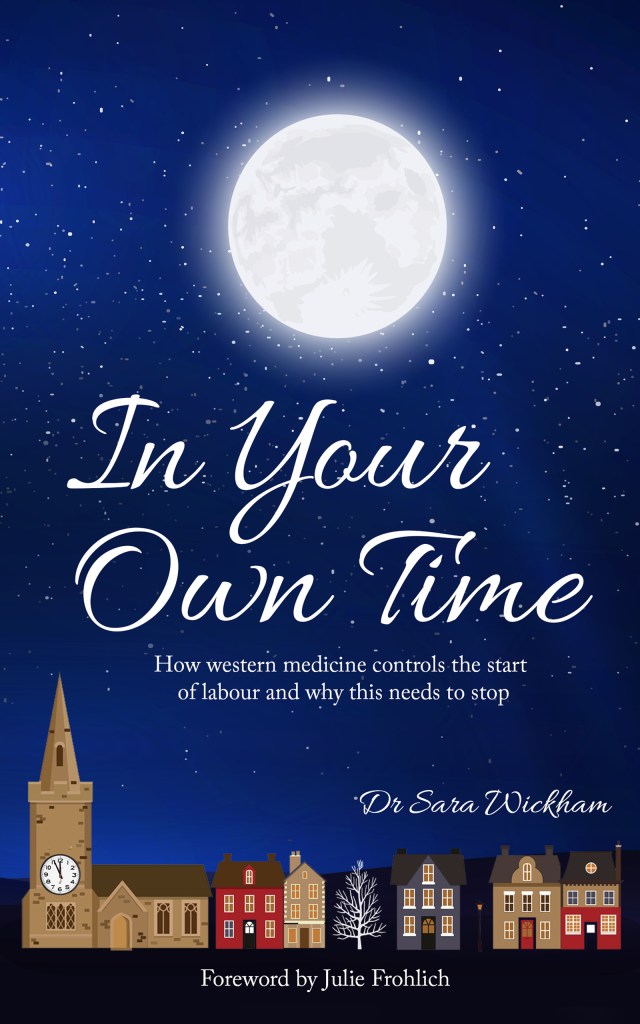
• Recommending intervention for marginal or no benefit: Guidelines often recommend interventions such as induction of labour or continuous electronic fetal monitoring (CTG). Yet there is often no evidence of benefit for induction, or only a very marginal benefit in one area which needs to be set against considerable downsides (often not mentioned in the guidelines, or by those recommending them) in others. And decades of evidence shows that CTG monitoring increases operative birth rates without improving long-term neonatal outcomes. These interventions also limit a woman’s mobility and autonomy in labour, which increase the chance of a cascade of intervention. For more on induction and the wider picture, see In Your Own Time.
Wider issues
Each of these scenarios highlights how guidelines reinforce the technocratic model of birth, where standardised protocols and technology override women’s embodied knowledge and individual needs.
This also impacts healthcare professionals. It’s hard to cope with working in a health care system and having to follow guidelines that go against your basic belief system. Moreover, medico-legal anxieties can foster guideline-driven defensive practise, curtailing midwives’ and doctors’ scope for autonomous practice even when a woman makes an informed decision.
This doesn’t only happen in maternity care; it’s a wider problem in western medicine.
You’ll find more on this, and many other topics, in my new book, Midwifery Wisdom.
In it, I explore the knowledge that experienced midwives develop over years of supporting women through pregnancy, birth, and the postnatal period. How midwives use their senses to assess labour progress, why the maths behind obstetric boundaries needs rethinking, the value of postnatal tea and toast, and when to put your gloves on. I cover topics from risk to cats in a book written to help people understand midwifery, and midwives better understand the value of their own skills and wisdom.

The evidence problem
The problem is linked with the move towards evidence-based practice.
As Greenhalgh et al (2014) argued, in an article published in the same issue as Prusova et al‘s (2014) research, evidence-based medicine (EBM) itself is facing a crisis when “…rigid guidelines based on thin evidence are prioritised over wisdom and context”.
Greenhalgh et al (2014) discuss some other problems as well. We now have an unmanageable volume of evidence. There is an overemphasis on following algorhythmic rules. And, as I mentioned above, the issue that interventions are recommended when there are only marginal gains.
They argued that a shift from treating disease to identifying and treating risk has changed the landscape, and yet evidence – which tends to focus on defining and treating specific diseases (or risks) has left us underequipped when trying to help people who have multimorbidity, or multiple problems.
What’s the answer?
So what’s the answer?
One key issue is that we need to get more women and families to be aware of these issues, so that they can decide whether or not they want guideline-based care. That’s the purpose of this blog post, so please feel free to share the link to this post with others.
We really need researchers like Prusova et al (2014) and Soylu et al (2025) to keep asking these important questions, and publishing their findings. I am really grateful to both teams for their work.
Both Greenhalgh et al (2014) and I agree that we need individualised care which prioritises judgement rather than rules, and to refocus on providing useable evidence that can be combined with context and professional expertise so that individual patients get optimal treatment.
That’s easier said than done in our current cultural context, but it’s important to keep highlighting that there are better ways than what we currently have.
I have explored several of these points in more depth in my books, should you want to read more, and we also have a few other blog posts which will help you ask the right questions so that you can decide whether you want to follow the guidelines or find your own path.
Further resources

About the Author: Dr Sara Wickham is an author, speaker, and researcher specialising in pregnancy, birth and maternity care. Her work focuses on evidence-based, woman-centred information and informed decision-making, drawing on more than 30 years of midwifery knowledge and experience.
Want to stay up to date and get regular updates on birth-related research and thinking sent free to your inbox?
Plus news of Sara’s books, projects, events, and courses?
Sign up to our email newsletter list here
We’ll send you regular, friendly updates to help you keep up-to-date and stay informed.

Books to help you become informed and make the decisions that are right for you…



If this blog post or any of Sara’s work has helped you or those you care for, please buy her a coffee and help us continue to provide independent birth information online as well as in her books.
Thank you.