
This information hub gathers together academic tips and blog posts.
Dr Sara Wickham worked in academia for a number of years before deciding to work independently.
During that time, she taught and supervised hundreds of undergraduate and postgraduate students.
She is still involved in lecturing and advising students from a number of disciplines.
Sara is the author of two books written for students.
The first is Appraising Research into Childbirth, an interactive workbook which helps make sense of birth-related research in a very hands-on way. (These are affiliate links, by the way. Any profit goes to the Birth Information Project.)
Sara also authored 101 tips for planning, writing and surviving your dissertation, and this post contains several tips from that book, to offer you a taster before you buy.
Sara’s ‘101 dissertation tips’ book has been described as “an essential book for research candidates.”
We hope you enjoy.

Dissertation tip 51
I’m going to start with the tip that received the most exclamations from those who were involved in the book’s production. Some of whom have managed to write at least one book and half a PhD thesis without knowing this, and who feel that it is going to improve their lives now they’ve learned about it.
“If your word processor has a function which allows you to create headings and look at them in a navigation pane, this can be very helpful, and spending a bit of time working out how to use it will save you more time in the long run.
In many word processing programmes, you can create several levels of headings and subheadings and these will help you navigate your document quickly.

You can see a list of the headings in a separate pane and the facility allows you to click on any of the headings and move straight to that part of the document, which is much easier than scrolling up and down in the main window.
Using headings can help you organise your work, move things about while keeping track of them and get an overview of your whole document, which is an important point that I’ll be coming back to again.
It’s also very satisfying.
You might be surprised at what a boost you get from adding headings into a document of notes and seeing how much you’ve thought about. It’s easy to change them to different levels of heading, or to add/delete them as you go, so nothing is set in stone.”
Dissertation Tip 55
“Varying your language makes it more interesting for the reader. When you’re writing about other people’s research – which is a significant chunk of what most of us do in dissertations – is it good to have some alternative words up your sleeve to describe what different authors said, so here are some you can try.
Do be careful about what you are using and when though, because some words are stronger than others, and you may be making a value judgement about what someone else is saying.
You can, of course, use words to demonstrate your critical analysis.”

Dissertation Tip 72
This is officially the naughtiest tip in the book, but I’m aware from my own experience and that of others that, sometimes, a bit of light relief can make all the difference…
“I’m a little sheepish about sharing this one, but I promised myself that I would share all my best tips and secrets in this book, so here goes!
Since I was an undergraduate student (when a housemate and I came up with this idea, although I’m sure many other people have thought of it too) I have nipped boredom in the bud by occasionally inviting friends and family to come up with a handful of words that I need to insert somewhere into my essay or dissertation.
About five words is a good number for me, and it helps to tell your friends at the outset that, while the idea is to challenge you to find a way to get in words that you might not normally use, you can’t realistically insert colloquial or very technical terms or swear words into most dissertations*.
(*Unless you’re interviewing holistic midwives and asking them what the think about the obstetric construct of post-term pregnancy. That’s what I did, and I managed to get about six different swear words in my PhD thesis by directly quoting the text of the interviews, but I didn’t feel the need to add that into the book).
No friends handy? Then here are five from me: paradigm, fabular, apex, nonevent, optimistic.“
In the book, I suggest some other variations on this, explain why it can work to help some people stay on track and let you know what to do if you really can’t fit a reference to the Foo Fighters into your theoretical physics thesis…
Dissertation Tip 102
A while back, I was meandering around the internet when I electronically bumped into a lovely woman who I midwifed through her Masters a few years ago.
“I’ve seen your new dissertation tips book“, she typed.
“What number tip is don’t reference Wikipedia lol?!”
There was a pause before I typed back: “I can’t believe I didn’t put that phrase in!”
She sent a shocked emoji.
And the chat reminded me of how often I have uttered those words when I’ve been supporting people writing up their research.
Because here’s the thing. Wikipedia is fabulous for finding information about Meat Loaf’s back catalogue. Or discovering why you shouldn’t get too attached when unknown ensigns appear in old episodes of TNG. If you need a definition of postpartum haemorrhage, though, or if your work requires you to quote the distance between the earth and the moon in the Precambrian period, there are better and more reliable academic sources.
And they’ll make your work look more reliable, robust and polished.
Other lecturers may disagree, but here’s my take. If I read an essay, assignment, dissertation or thesis written by someone who has used wikipedia as a primary source for a piece of factual information relating to their field of study, I tend to think one of three things.
(a) They couldn’t be bothered to go to the relevant professional or academic text.
(b) They didn’t know how to find the information.
(c) They genuinely think that Wikipedia (or similar online sources) are a good a source of knowledge on such topics.
And unfortunately, none of the above possibilities give me confidence that I am looking at the work of someone who is excelling in their field.
So I’m adding tip 102 here, because I really, really want your work to impress your readers (who will include the assessors, examiners or markers) from the outset. And it is my belief that the few extra minutes that it will take you to get your facts and citation from a classic textbook or an academic article will be well worth the investment.
Unless you’re writing your PhD on changes in the public understanding of the composition of the Bat Out of Hell trilogy. If that’s the case, then go right ahead.
Dissertation Tip 103
An obstetric colleague once sent me an email with a link to the Cochrane review on High-dose versus low-dose oxytocin infusion regimens for induction of labour at term with a note pointing me to the first line of the plain language summary.
“Some women do not begin labour spontaneously and may need assistance”, it read.
“Really???!!!”, wrote my obstetrician friend underneath. “Like they stay pregnant for EVER?!”
My friend was entertained that this had got past the proofreading stage, and thought it might be a good example to use when I’m teaching students dissertation tips.
And she’s right.
It’s a great illustration of why, when writing academic work, it is a good idea to put it away for a few days and then proofread it.
Ask yourself whether you are including unsubstantiated statements, confusing statements or things that could be misinterpreted.
Then ask someone else to proofread it and maybe then read your work out loud in order to double check. We – and I include the authors of this and every other Cochrane review in this, because they do fabulous work – are only human and have all done all of these things and there’s always the odd line that will slip through the net, but it can still be useful to have reminders of the value of double checking.
And yes, by the way, my friend and I know that there is a very tiny debate about whether there are a very few women who wouldn’t go into labour spontaneously without some kind of assistance, but we really are talking miniscule numbers here and this isn’t what the authors of this review are talking about.
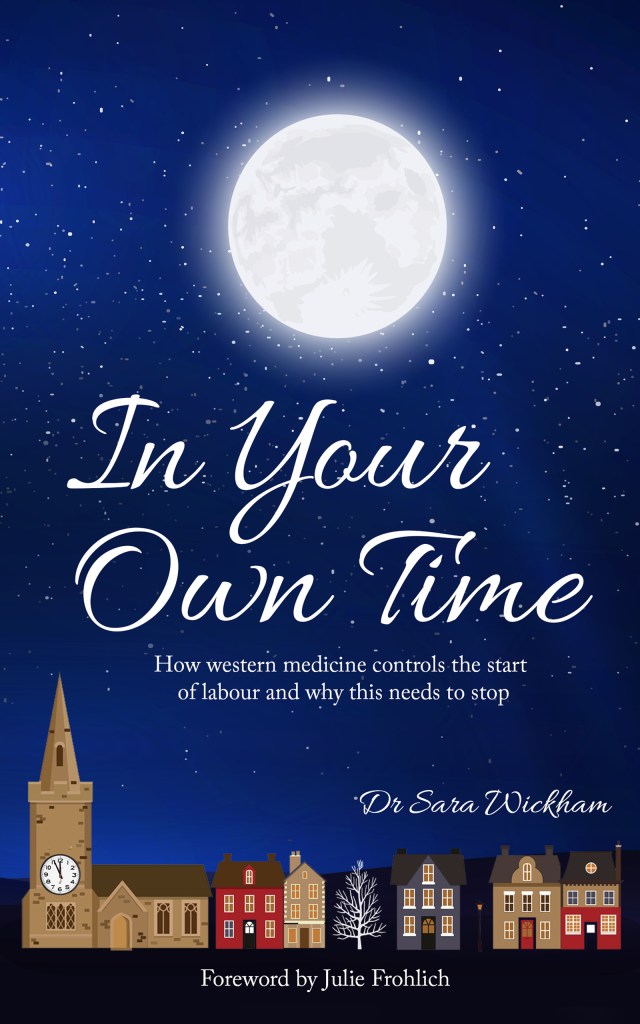
If you’d like to discuss that or learn more about the ins and outs of induction for so-called post-term pregnancy then take a look at my induction book.
The point is a simple one. It’s good to think carefully about what you’re writing, especially in academic work, and about whether and how it might be interpreted by those who will read it.
If you’re finding these tips helpful, there are 98 more where they came from!
Click here to find out more about the book, and grab your copy.
Blog posts especially for midwifery students
General academic questions and tips

About the Author: Dr Sara Wickham is an author, speaker, and researcher specialising in pregnancy, birth and maternity care. Her work focuses on evidence-based, woman-centred information and informed decision-making, drawing on more than 30 years of midwifery knowledge and experience.
Want to stay up to date and get regular updates on birth-related research and thinking sent free to your inbox?
Plus news of Sara’s books, projects, events, and courses?
Sign up to our email newsletter list here
We’ll send you regular, friendly updates to help you keep up-to-date and stay informed.

Books to help you become informed and make the decisions that are right for you…



If this blog post or any of Sara’s work has helped you or those you care for, please buy her a coffee and help us continue to provide independent birth information online as well as in her books.
Thank you.