

The Big Baby Trial is a large clinical trial that was carried out in the UK. Its findings were published in The Lancet in May 2025. A related study on cost effectiveness was published in the British Journal of Obstetrics and Gynaecology.
In this blog post, I’m going to explain The Big Baby Trial and offer a critique of it.
If you’re looking for help making decisions about your birth, I also have a blog post which looks at the evidence on induction for big babies more widely.
The Big Baby Trial: Aims and Methods
The aim of The Big Baby Trial was simple. Researchers wanted to find out whether early induction of labour (at about 38 weeks of pregnancy) would reduce the chance of shoulder dystocia. (Learn more about shoulder dystocia here.)
In order to do that, they carried out an open label (not double blinded) randomised controlled trial.
The primary outcome “…was incidence of shoulder dystocia, assessed by a masked independent expert adjudication panel who reviewed participants’ delivery notes.” (Gardosi et al 2025).

So far, so good. Yes, there is less chance of bias when trials are single- or double-blinded, so that the results can’t be affected by either the participants and/or the researchers knowing which group women were in, but that’s just not possible with interventions such as induction.
It’s possible (and some might say likely) that both women and researchers already had views about the value of induction or watchful waiting, which may have affected their decision making, for instance about offering caesareans or other interventions. But that can’t be helped.
And it’s commendable that shoulder dystocia was assessed independently, as this doesn’t always happen, especially in trials on induction of labour.
Who were the participants?
The participants in The Big Baby Trial were “…women aged ≥18 years with a suspected LGA fetus (estimated fetal weight >90th customised percentile) as identified by ultrasound scan between 35 weeks and 0 days (35+0 weeks) of gestation and 38+0 weeks’ gestation, recruited from 106 hospitals across England, Scotland, and Wales in the UK.” (Gardosi et al 2025).
The researchers excluded women with “…drug-treated diabetes, gestational diabetes, and elective caesarean section or induction already planned or indicated for any reason.” (Gardosi et al 2025). This is confusingly worded, because it turns out that they mean they excluded women with drug-controlled gestational diabetes, not all women with gestational diabetes. The tables and discussion show that women with diet-controlled gestational diabetes were included in the trial.
The trial ultimately included data from “…2893 women [who] were randomly assigned to induction of labour (n=1447) or standard care (n=1446)”. (Gardosi et al 2025).
Why The Big Baby Trial was stopped
One of the first things to raise a red flag about this trial is this sentence, relating to the number of women who were included in the study.
“…the trial was terminated before the target of 4000 participants was reached on advice of the data monitoring committee...” (Gardosi et al 2025).
When researchers set up trials, they need to do calculations in order to determine how many participants they need in order to be confident that any difference they see is genuine, and not a chance result. The Big Baby Trial researchers calculated that they needed 4000 women to see if induction made a difference to the chance of shoulder dystocia.
As above, the trial was stopped after gathering data on 2893 women. So the trial was underpowered, according to its own standards.
Later in the paper, the researchers explain that the early termination of The Big Baby Trial was due to, “…the low incidence of shoulder dystocia in the standard care group, which related to the many early deliveries in this group resulting in smaller-than-intended differences between trial groups in gestational age and birthweight.” (Gardosi et al 2025).

It is curious that, while the researchers acknowledge that the difference in outcomes was so marginal that it meant their trial needed to be stopped, they still overemphasise this marginal difference elsewhere, as I will discuss below.
Participants and possible bias
I understand from clinicians on the participating sites that many women declined to enter the trial.
As with all induction trials, those who participated are likely to already be inclined towards induction of labour, and perhaps other interventions.
That’s no criticism of them, of course. And it’s not a factor that the researchers can influence. But it is something to bear in mind. The women in the trial are not necessarily representative of all women in the UK.
The trial probably doesn’t include many women who, for instance, are seeking home births, water birth, or using holistic and alternative approaches to labour and birth.
At the other end of the spectrum, it also doesn’t include the women who have decided to have an elective caesarean.
What were the findings?
“Analysis according to random assignment, including the 25% of pregnancies in the standard care group that were also delivered early, showed no statistically significant difference in incidence of shoulder dystocia between the two study groups.” (Gardosi et al 2025).
In just the few days since The Big Baby Trial was published, I have heard from many midwives and others who are concerned that the results have been presented in a misleading way. I share their concerns.
If you look at the numbers on their own, the quote above, and the fact that the trial was stopped because there was no significant difference, you might think that induction doesn’t appear to be very effective at reducing shoulder dystocia in suspected big babies.

And you would be right.
However, if you read the words of the researchers throughout the paper instead of focusing on the numbers, you might be confused. That’s because the wording of the results suggests that there is a benefit to induction.
I don’t think this is true, and I’ll explain this more fully below, but it’s another clue that something isn’t quite right here.
No significant difference
Here’s more of what the researchers wrote:
“No significant difference in incidence of shoulder dystocia was found between trial groups in the ITT [intention to treat] analysis, probably due to the high proportion of earlier-than-expected deliveries in the standard care group reducing the intended between-group differences in gestational age and birthweight.” (Gardosi et al 2025)
The underwhelming nature of the results isn’t the fault of the researchers, by the way. Not everything works as we hope it will and it is just as useful to know that something doesn’t work as to know that it does. But the wording of the papers presenting the research is absolutely on them.
“However, in the per-protocol analysis, compared with all deliveries after 38+0 weeks’ gestation, induction of labour between 38+0 weeks’ gestation and 38+0 weeks’ gestation did show a significant reduction in shoulder dystocia.” (Gardosi et al 2025).
Note: I think there’s a typo in the text in the above paragraph. Based on later detail, I think they mean ‘induction of labour between 38+0 weeks’ gestation and 38+4 weeks’ gestation,’ but I will return to this and correct it if and when the paper is updated or I learn differently.
No significant difference (unless you do this…)
So the intended means of analysing the data – intention to treat – showed no significant difference between the groups. This means of analysis is the ideal one. It reflects what happens in real world settings and provides the most accurate information about the effects of an intervention. And it’s the method the researchers said they would use when they planned the trial.
A difference only appeared when the researchers removed some of the women from the analysis and analysed the data a different way.
Even then, the difference was really small: 2.3% of the babies in the induction group experienced shoulder dystocia versus 3.7% of the babies in the standard care group.

This tiny reduction in cases of shoulder dystocia which only shows up when you analyse the data one specific way is not clinically significant. It’s also worth noting that most cases of shoulder dystocia are easily resolved.
No difference in neonatal outcomes
The tiny difference in the occurrence of shoulder dystocia in the per protocol analysis is even less relevant when we consider that there was no difference in neonatal outcomes.
“No statistically significant differences were found in neonatal secondary outcomes between study groups, including admission to the neonatal unit after delivery (RR 1·11 [95% CI 0·90–1·38]) and neonatal hospital readmissions within 30 days of postnatal inpatient discharge (RR 1·18 [0·97–1·44]; table 4).” (Gardosi et al 2025).
The number of adverse events was also the same in both groups (Gardosi et al 2025).
Comparison of maternal and neonatal outcomes at 2 months and 6 months showed no differences between the two groups (Gardosi et al 2025).
All of these findings indicate that there is no benefit to early induction.
(In fact, we know from other work that there are many downsides to induction, as you may be aware, and wider issues to consider. I don’t have space to cover those in this post, but there is lots of information here.)
However, the related cost analysis of The Big Baby Trial shows that induction is more expensive, because of the higher cost of neonatal care for the babies in the induction group, compared to those whose mothers received standard care (Naghdi et al 2025). The take home message here isn’t about the financial cost, though. It’s about the fact that the babies in the induction group required more neonatal care, as reflected in the higher cost.
Cherry picking and clever framing
The main report of The Big Baby Trial highlights one marginal result while other important outcomes have been underexplored, ignored, or relegated to the supplementary data.
It’s almost as if the authors so badly wanted the research to show a benefit to induction that they have interpreted the results in favour of induction even where the actual data don’t support this.
Wider maternal implications of induction (e.g. medium- and long-term physical effects, maternal satisfaction, wider emotional effects including birth trauma) are glossed over or omitted.

This is sadly not a new trend. As I have written about in In Your Own Time, ignoring women’s outcomes and experiences is common thing with research on induction of labour. And it’s really not okay.
Women all over the UK will now likely be told that, ‘evidence shows that it’s safer to have an induction if you’re thought to have a big baby.’
But the results of The Big Baby Trial really don’t show that at all.
And opting for induction may affect them for years, in ways that they don’t even realise are an issue.
A hamster’s worth of difference
Back to the results, though, because another important finding is the mean difference in birthweight between the two groups was 213·3g, which is really small.
I have previously noted that the difference in birthweight between babies born after induction or waiting in the Cochrane review (178g) was the equivalent to an average-sized hamster (Wickham 2018).
The difference in birthweight in The Big Baby Trial is a bit higher, at 213g, but still very much within the normal range for hamster weight. Or, if you prefer, it’s the weight of a small avocado.

I use the hamster analogy to show how babies really don’t grow that much in the last week or two, as some women are led to believe.
The weight estimation question
I also want to highlight what The Big Baby Trial (again) shows us about the inaccuracy of estimating an unborn baby’s weight by ultrasound.
We already know that many of the women who are told that their baby is big after having an ultrasound scan, and who are then told they need induction because of this do not actually have a big baby. Many studies show a margin of error of 15%, and up to 20%. This is why so many of the women who are told that their baby is big end up giving birth to an average-sized baby.
A significant proportion of babies deemed to be large on ultrasound are not large at birth. (I wrote about this in In Your Own Time).
In The Big Baby Trial, “A limitation was the poor predictive value of scan-estimated fetal weight for LGA [being large for gestational age] at birth.
[At birth] … only 40% of participants in the standard care group and 42% in the induction group had a baby with a birthweight higher than the 90th percentile.” (Gardosi et al 2025).

So 58-60% of the women who were in a study researching big babies, whose ultrasound scan showed that they had a suspected big baby, did not actually have a big baby.
The ultrasound got it wrong.
As a side note, the trial also highlighted problems with the GROW standard, which I don’t have room to go into here, but please see the discussion in Gardosi et al (2025) if you are interested in this.
High intervention rates
Both groups of women in The Big Baby Trial had high rates of induction and intervention overall, including caesarean rates of 28-33%. This is actually lower than the English national average of 42% at the time of the trial. That’s probably because the study excluded those women who opted for a caesarean. It also excluded some groups of women who would have had a higher chance of a caesarean.
The standard care group was also not a true ‘expectant management’ group. In fact, 70.6% of the women in the standard care group had their labours induced, compared to 91.7% of the women in the induction group. (It’s not 100% because some women go into labour before induction takes place).
This high rate of induction in the standard care group is why the researchers removed some women from the per protocol analysis, because the contrast between the groups was blurred. It is further evidence of practitioners’ preference for induction, even when they were asked to try to avoid offering or recommending early induction to the women in the standard care group.
This is acknowledged by the researchers, in their discussion:
“Early interventions in the standard care group could have been due to a combination of factors, such as clinical concerns; awareness of the previously published results by Boulvain and colleagues10 and subsequent Cochrane review,8 which suggested benefits of early induction in reducing shoulder dystocia; and information provided as part of the consenting process, which highlighted and reminded participants and their clinicians of the potential complications associated with delivering LGA babies. Furthermore, the trial took place during various NHS investigations into avoidable adverse outcomes in maternity care, which put pressure on frontline staff to err towards intervention when in doubt.” (Gardosi et al 2025).
Claims about planned caesarean
The Big Baby Trial researchers claim that, “Contrary to previous evidence, induction was found to decrease the need for caesarean sections.” (Gardosi et al 2025).
I have covered this claim here, as it is similar to those made in other induction studies, and has just as little basis in truth.
The lower caesarean rate in the ‘standard care’ groups in induction trials is not actually a benefit of induction.
It’s explained by the fact that many obstetricians are more comfortable with induced and medically-managed labours than they are with spontaneous labours, which means that they are more likely to recommend an in-labour caesarean to the women who went into spontaneous labour.
While the researchers claim that planned caesarean may be more cost-effective than early induction, this claim hasn’t factored in the long-term consequences of caesarean for women and babies.
Induction and HIE
A number of other issues and questions have been raised about this study.
The findings showed that, “Although two cases of hypoxic ischaemic encephalopathy occurred after induction, no cases of fracture, hypoxic ischaemic encephalopathy, or permanent brachial plexus injury occurred after shoulder dystocia.” (Gardosi et al 2025).
This needs more attention. We know from a meta-analysis that intrapartum oxytocin is associated with a higher chance of neonatal encephalopathy (Burgod et al 2021) and recent research in Finland showed that induction is a risk factor for HIE (Roto et al 2024).
While we do have some evidence about medium- and long-term adverse outcomes following induction, we need more work on this.
Claims about length of hospital stay
The authors’ claim that planned induction does not lead to increased hospital stay could be argued to be misleading, given that so many of the women in the standard care group ended up having an induction anyway.
In reality, induction leads to significantly longer hospital stays. These can, in the words of one consultant midwife, “be a thoroughly miserable affair.” (Julie Frohlich, personal correspondence 2025).
Understandably, being alone in hospital for days on end is a key concern for many women, and the misuse of this statistic will help no-one.
The cost of induction recommendations
Most women do not go into labour naturally at 38 weeks’ gestation, and most babies are not ready at this point. The Big Baby Trial fails to consider the trauma of having labour induced at a gestation that is far too early for most women’s bodies, and that comes at the cost of more intervention, which have long-reaching impacts on women’s health.
We also know from numerous studies that babies born too early have significantly poorer outcomes. Due date prediction is inaccurate, and offering induction always means there is a risk that a baby is not as developed as the due date estimate indicates.
It is true, and commendable, that Gardosi et al (2025) have highlighted the inaccuracy of ultrasound scanning for weight estimation, but they have not discussed dating of pregnancy, or the way in which estimated due dates may be changed by later scans, which involve the tools that they have found questionable.
Early term birth has far reaching issues that have not been adequately addressed in The Big Baby Trial.
There is widespread concern that these results, and the pressure that women and families experience around induction more generally, will lead to more elective caesareans.
Too many women are opting for elective cesarean birth not because it is the best option for them, but because they have been scared by practitioners giving them fear-based information about the estimated size of their baby.

For those who are understandably wary of induction and get scared into thinking they’re going to have an enormous baby, caesarean can feel like the only good option.
Yet this is major surgery that can have an immense impact on their long-term health, the health of their baby, and their experience of future pregnancies.
Waiting for labour to start spontaneously is also a viable option, and may lead to better outcomes on every level.
We just need clinicians to stop scaring women.
Before you finish reading, I have a request.
I don’t get paid to produce these analyses. I’m self-employed, and my income comes from just two sources: book sales, and my donations page.
If my work has helped you to better understand this area, especially if you’re going to use what you’ve learned here within your own work or business, please buy me a coffee to help support my content creation work. Thank you.

Summing up
The combined findings from The Big Baby Trial and its economic evaluation do not provide a robust basis for recommending routine early induction for suspected large for gestational age babies.
This study has taken a primary endpoint (shoulder dystocia), which is a short-term, physical outcome. While clinically important, its effects are very variable. This study fails to demonstrate significant benefit to induction in terms of reducing shoulder dystocia, but is also fails to differentiate between shoulder dystocia with or without injury, creating unjustified alarm.
The Big Baby Trial also underplays the physical, psychological, and social impact of induction on women, babies, and families. It hasn’t consider the long-term impact of induction and caesarean on breastfeeding, for psychological health, or in relation to the consequences for repeat caesareans.
The related cost-effectiveness also study showed that early induction for suspected big babies was not cost-effective, primarily because it leads to higher neonatal care costs for babies whose labours are induced (Naghdi et al 2025).
Therefore, even if we accept the claim that there is a marginal benefit in relation to the reduction of shoulder dystocia, this benefit remains short-term and limited in scope, and comes at the cost of other downsides and consequences.
This trial adds to a growing body of evidence suggesting that complex birth interventions are often presented in selective and skewed ways, reinforcing systemic bias toward intervention over physiological birth. The implications for practice and policy must be interpreted cautiously and contextually.
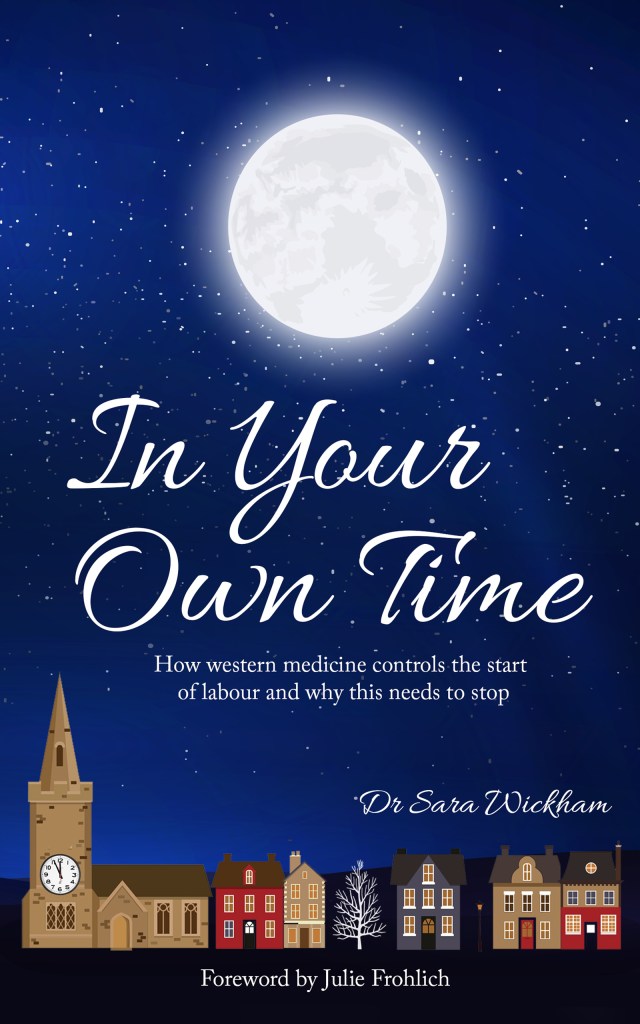
If you’d like to know more about induction, I have two books which have helped hundreds of thousands of women, families, and clinicians to better understand the evidence and the issues:
Thanks to Julie Frohlich, who read and commented on this blog post.

About the Author: Dr Sara Wickham is an author, speaker, and researcher specialising in pregnancy, birth and maternity care. Her work focuses on evidence-based, woman-centred information and informed decision-making, drawing on more than 30 years of midwifery knowledge and experience. Her most recent book is Midwifery Wisdom.
Want to stay up to date and get regular updates on birth-related research and thinking sent free to your inbox?
Plus news of Sara’s books, projects, events, and courses?
Sign up to our email newsletter list here
We’ll send you regular, friendly updates to help you keep up-to-date and stay informed.

Books to help you become informed and make the decisions that are right for you…



If this blog post or any of Sara’s work has helped you or those you care for, please buy her a coffee and help us continue to provide independent birth information online as well as in her books.
Thank you.