
Weight stigma is a pervasive and problematic issue in our modern culture. It can negatively affect the experience and wellbeing of anyone who has a higher BMI.
But its impact in health and maternity care can be particularly harmful.
For pregnant women with higher body mass index (BMI), the challenges go beyond physical health.
Biases and assumptions about weight can affect the quality of care that women/families receive, restrict the options that are available, and limit their ability to make the decisions that are right for them.
This blog post explores the concept of weight stigma, drawing on insights from my book Plus Size Pregnancy: what the evidence really says about higher BMI and birth. It highlights findings from newly published research that sheds light on how these issues manifest in maternity care.
Understanding weight stigma
Weight stigma, also known as weight bias or weight-based discrimination, refers to the stereotyping, mistreatment, and discrimination experienced by people with higher body weight.
It often shows up in overt forms, such as direct comments, but also in subtler, covert behaviours.
As I write in my Plus Size Pregnancy book:
“Weight shaming can occur in overt, direct statements about body size or health and as covert messages, for instance someone rolling their eyes and huffing about needing to get a different piece of equipment, raising their eyebrows, pulling faces, or casting their eyes at someone’s body as they try to sit in a chair that isn’t size-friendly.” (Wickham 2023).
Weight stigma not only reinforces the harmful and unfounded messages of diet culture, such as the myth that people who have larger bodies are inherently lazy or undisciplined, but also has serious physical and psychological consequences.
The effects of weight stigma
As researchers have shown, the effects of weight stigma can include increased stress, eating disturbances, and poor mental health outcomes. In fact, as I explain in my book, stigma itself can contribute to higher BMI and related health issues:
“A systematic review of 33 studies found that, ‘Weight stigma was positively associated with obesity, diabetes risk, cortisol level, oxidative stress level, C-reactive protein level, eating disturbances, depression, anxiety, body image dissatisfaction and negatively associated with self-esteem among overweight and obese adults.’ (Wu & Berry 2018: 94).” (Wickham 2023).
A 2025 study showed that, “experiencing weight stigma during childbirth increases the odds of cesarean birth.” (Schwenk et al 2025).
The researchers in this study confirmed that it is weight stigma that leads to many larger women being told they need a caesarean, rather than this being a direct result of their body size.
This is also something that I discuss in my Plus Size Pregnancy book.

Another review by Sasidharan et al (2025) shows that, “Weight stigmatization can hinder the communication between healthcare providers and women leading to misunderstanding and compromising the quality of care. This can prevent women from seeking necessary care. Stigmatizing behavior of friends, family and the perpetuation of stigma in the media influences how women perceive their pregnancy weight gain, intensifies feelings of shame, isolation and negatively impacts women’s mental well-being and body image during pregnancy.”
Deeply entrenched bias
In maternity care, these biases are often deeply entrenched, affecting everything from routine interactions to clinical recommendations.
There is clear evidence that weight stigma is common among midwives and doctors, and I will discuss that further below. But other birth workers can exhibit it too, as Polina describes:
“I thought I would protect myself by hiring a doula. But she was every bit as fatphobic as some of the midwives. She used softer language but the message was the same: you’re not okay as you are, it would be better if you changed. Constant little comments and tips about food, as if I didn’t know what healthy eating looked like.” (Wickham 2023).
Polina’s experience reflects a broader cultural problem: weight stigma is so embedded in our society that many people are simply unaware of their biases.
Insights from research
A recent study, “In an ideal world”: A qualitative exploration of shared decision-making and weight stigma in antenatal care”, highlights the ways in which weight stigma affects maternity care.
Researchers interviewed maternity clinicians in Melbourne, Australia, to explore how weight bias influences shared decision-making (Hawke et al 2024). (Some of the clinicians challenged the term, ‘shared decision making,’ which I have also done: more on that here.)
The study identified three key themes:
- Whose choice is it anyway? This theme reflects the incongruence between the ideal and the reality of shared decision making in antenatal clinics. We know from many other studies and stories that clinicians often frame decisions in ways that minimise women’s agency, particularly when BMI is considered a “risk factor.”
- Pregnancy as risky. A risk-focused lens dominated discussions, with higher weight amplifying perceptions of danger.
- Excess weight as a diseased state. The authors note that this,“reflects clinicians’ perception of high BMI as a condition requiring management and containment. Having a high BMI was seen by all clinicians as an innately high-risk condition.” (Hawke et al 2024).
Weight stigma and prejudice
We have long known that weight stigma shapes clinicians’ attitudes, often leading to prejudices that limited meaningful collaboration.
Robins’ et al’s (2025) review, “highlighted that some midwives and student midwives hold negative, stigmatising views towards larger bodied women. Midwives are impacted by their own attitudes and beliefs as well as interpersonal, societal, organisational and system level factors.”
The findings of Hawke et al‘s (2024) research show how deeply weight stigma can undermine the principles of shared decision-making. Clinicians’ beliefs about weight and risk not only affect the care provided but can also marginalise women, leaving them feeling disempowered and unheard.
These results align with the broader patterns that I discovered in my own research, where medical systems and practices often fail to recognise or challenge weight bias. This study underscores the urgent need for systemic change to ensure equitable, respectful, and evidence-based care for everyone.
“Shame, harmful attitudes, and preconceptions”
A 2024 systematic review shows that the problem is widespread. Synthesis of findings from 38 papers, theses and a book chapter, “…demonstrated that women of a higher weight experience shame, harmful attitudes and preconceptions from healthcare professionals regularly and repeatedly while receiving maternity care. This can be alleviated by individualised supportive care from a healthcare professional.” (Cunningham et al 2024).
The authors concluded that:
“Negative interactions with maternity care professionals are central to the experience of weight stigma, leading to a sense of ‘shame’, with pervasive feelings of humiliation, judgement and blame. Current guidance does not acknowledge the stigmatising effects of weight related conversations, additional interventions and restrictions on women’s birthplace choices. Adopting a shame-sensitive lens within a culturally safe approach to maternity care could transform support for women.” (Cunningham et al 2024).
The problem of recognition
Above, I shared the words of Polina, who experienced weight stigma from her doula. I shared this to illustrate the problem wherein some people do not recognise their own bias.
Hawke et al (2024) found the same in their study.
“In this study, clinician’s attitudes toward weight stigma appeared at odds with the reported presence of weight stigma in maternity care. Though all clinicians recognised the concept of weight stigma, the majority did not observe it in contemporary maternity care. It was perceived by some clinicians as a thing of the past, in stark contrast to the recently reported experiences of weight stigma in the literature. Even the clinician who voiced open disdain for women with high BMI denied the presence of weight stigma in maternity care, demonstrating a lack of insight into how weight stigma is manifest in the clinical environment.”

“Clinician’s perception of excess weight as a diseased state, a manifestation of trauma, or a lifestyle choice aligns with a weight-centric model of healthcare, a belief that health status can be predicted by weight. This model of healthcare has been criticised for its limitations and is recognised as exacerbating, and sometimes being borne out of, weight stigma. Furthermore, the lack of recognition of weight stigma by clinicians and their failure to consider the ways stigma limits access to choice may also result in cognitive dissonance, where harm is being inadvertently enacted upon women with high BMI despite the best intentions of the clinician to avoid shame or stigma.”
This is such a telling finding, and it reflects a very real problem, which I also see personally. When talking to colleagues and friends about my research on this topic, I have heard many people express delight that I have written my book. They often tell me that they are really concerned about the experiences of women with a higher BMI, and that they want the conversation to change. Moments later, the same people often make statements which reflect and perpetuate the very beliefs and stereotypes that define weight bias.
We have a long way to go.
Inaccurate information
I want to mention one last thing that I noticed in Hawke et al‘s (2024) study.
One of their respondents, who they call Clinician P, makes the following statement:
“There is no risk that I can think of that is lower because you have a high BMI. They’re all going to be high.” (Hawke et al 2024).
I want to clarify that neither of these statements are factually correct in terms of the evidence.
There are, in fact, several advantages to having a high BMI, in the shape of outcomes (or risks, if you use that term) that are less likely for larger women than for those with a lower or ‘healthy’ BMI. (Yes, using the word ‘healthy’ or ‘normal’ in that context is inappropriate and inaccurate, hence the scare quotes.) Those of us with a higher BMI are, for example, far less likely to have a severe perineal tear, and less likely to be affected by a postpartum haemorrhage. More on both of those and some other advantages in my book.
In addition, the risks of having a higher BMI are not as high as is often made out. Yes, there are some things that are a bit more likely, but the chance is often not that much higher, and there are things that you can do to improve your chance of a good outcome for you and your baby.

It’s because of hearing that so many women were being given incorrect and potentially harmful information like this that I spent a year researching this topic and writing a book based on the actual evidence to help set the record straight.
Why weight stigma matters so much
It’s important to understand that weight stigma is not just a personal or interpersonal issue.
Like racism and sexism, it is embedded in the very systems designed to care for us.
Unlike racism and sexism, however, weight stigma is not yet seen as a priority. Which is not to say that we have solved issues of racism, sexism, or other kinds of prejudice – far from it. But weight stigma is still seen by some people as more acceptable than other kinds of prejudice, because they mistakenly believe that it is ‘for our health.’
There is, however, no evidence that weight stigma is helpful or that it leads to better health.
In fact, there is a lot of evidence, as I noted above, that weight stigma harms people’s health.
For people in larger bodies, weight stigma can lead to suboptimal care, emotional distress, and diminished autonomy. When this happens during one of the most significant times in your life, and at the point where you need to feel confidence because you now have responsibility for a tiny, new person, it can be devastating.
As I discuss in Plus Size Pregnancy, addressing weight stigma requires us to challenge societal norms and question long-standing assumptions about weight, health, and risk. Compassionate, evidence-based care should be the standard for everyone, regardless of their size, shape, or weight.
A 2025 paper described Weight-inclusive maternity care: An approach to reduce weight stigma and improve pregnancy and birth outcomes. The authors, “(1) outline weight-inclusive maternity care; (2) demonstrate the existing evidence supporting weight-inclusive maternity care; and (3) identify research gaps and recommendations that will support widespread adoption of weight-inclusive maternity care.”
How to find out more
If you’d like to learn more about weight stigma and how it impacts pregnancy, AND find out about what the evidence really shows about higher BMI and birth, check out my book.
Plus Size Pregnancy: what the evidence really says about higher BMI and birth offers evidence, insights, tips, and support for anyone who wants to find out more and make the decisions that are right for you.

About the Author: Dr Sara Wickham is an author, speaker, and researcher specialising in pregnancy, birth and maternity care. Her work focuses on evidence-based, woman-centred information and informed decision-making, drawing on more than 30 years of midwifery knowledge and experience.
Want to stay up to date and get regular updates on birth-related research and thinking sent free to your inbox?
Plus news of Sara’s books, projects, events, and courses?
Sign up to our email newsletter list here
We’ll send you regular, friendly updates to help you keep up-to-date and stay informed.

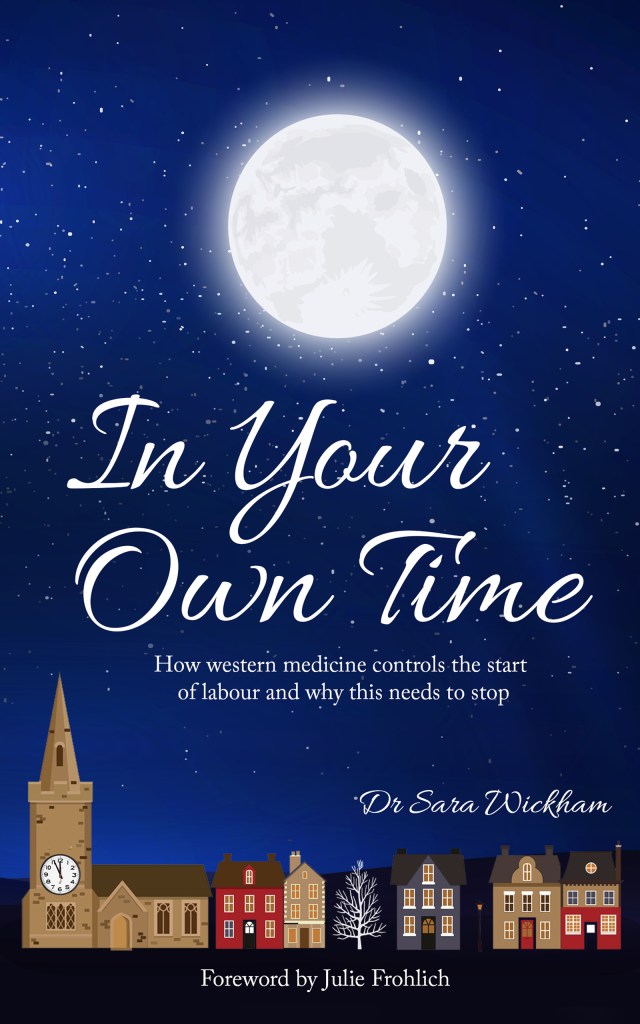
Books to help you become informed and make the decisions that are right for you…



If this blog post or any of Sara’s work has helped you or those you care for, please buy her a coffee and help us continue to provide independent birth information online as well as in her books.
Thank you.