
If you’re pregnant and confused about whether it’s safe to take paracetamol (also known as acetaminophen or Tylenol) in pregnancy, you’re not alone.
Recent headlines and conflicting information have left many expectant mums wondering what to do when they’re dealing with pain, headaches, or fever.
But the evidence on paracetamol in pregnancy and birth isn’t clear-cut.
The issues are nuanced, and complex. There are pros and cons to taking any medication, but it’s also important to consider the costs of not taking medication when one is in pain or experiencing other symptoms, such as fever.
This post will guide you through the current research and point you to trusted, evidence-based resources which have looked at this topic, so you can make the decision that’s right for you.
The Current Medical Consensus
Currently, major medical organisations worldwide recommend paracetamol as the safest pain relief option during pregnancy when used as directed.
This includes The Royal College of Obstetricians and Gynaecologists (RCOG), The American College of Obstetricians and Gynecologists (ACOG), The UK Medicines and Healthcare Products Regulatory Agency (MHRA), The NHS, The World Health Organization (WHO), and The European Medicines Agency.
There is an important reason that paracetamol is recommended when pain relief is needed in pregnancy. It’s because other common pain relievers like ibuprofen and other NSAIDs are generally not recommended during pregnancy, especially after 20 weeks, due to known risks to the unborn baby.
Recent Research
The recent controversy has stemmed from the publication of a number of studies which have looked at a possible link between paracetamol use in pregnancy and autism.
But the results of the studies are conflicting, the issues are complex, and the short answer is that we don’t really know whether there is a link or not.
Although, as my colleague Rachel Reed pointed out, the response to this situation highlighted ongoing paternalism and the issue of ‘expert egos’, as some people rushed to reassure women that paracetamol was safe, and urged them to ‘trust me, I’m an expert’.
The truth is more complex than this. Another trusted colleague, Henci Goer, reviewed the studies and here’s her excellent blog post.
The Complexity of Decision Making
The problem isn’t just the uncertainty of the research results.
It’s that pain relief can be life-changing, and is often very necessary in pregnancy. As the authors of a recent paper discuss:
“…headaches are common in early pregnancy, migraines often change in pattern [1, 2], and pelvic pain becomes increasingly prevalent as gestation progresses [3], making the need for safe, effective symptom relief both physiological and unavoidable.” (Samara & Khalil 2026).
Women already have enough to deal with, and the pressure that comes from being told that the safest form of pain relief is now unsafe can be immense, especially where expectations of women are already unreasonably high.
The Risks of Not Treating Pain and Fever
It’s important to also consider the risks and downsides of NOT taking pain or fever relief. This is a crucial part of the picture that sometimes gets overlooked. but it’s important knowledge. I’m sure I’m not not alone when I say that I regularly talk to women who are living with pain rather than taking pain relief, and who aren’t aware of the downsides of this approach.
Fever in pregnancy, especially in the first trimester, has been linked to miscarriage, anomalies, and reduced fetal growth, and paracetamol can be helpful in reducing fever.
Unmanaged pain in pregnancy can also have significant consequences. Chronic pain increases stress hormones like cortisol, which can affect fetal development, and severe or persistent pain may be associated with higher rates of anxiety and depression during pregnancy. Women who are in pain may be unable to sleep, and less likely to feel able to eat well or exercise, and their quality of life can be negatively impacted.
Pain is personal, and only you can decide whether your pain is problematic, but these wider issues are worth bearing in mind. Samara and Khalil (2026) have also written about this, and about maternal stress. They discuss the evidence showing that maternal stress is harmful, which contrasts with the uncertainty that we have about paracetamol. You can read their article in full here.
What’s Right For You?
Neither I nor any of the people who have written on this topic can tell you what’s right for you.
Samara and Khalil (2026) argue against the fearmongering that has occurred on this topic and call for more research, noting that, “The choice should not be between a pounding migraine and a pang of guilt but between adequate, data-supported options, each with clear risks and benefits, and a clear pathway to care.”
In the meantime, they suggest that:
“Until new options arrive, paracetamol remains the recommended safe first-line option in pregnancy and we should communicate this with clarity and compassion, honouring the evidence we have and the people who must live with the systemic information gaps. That is what real choice looks like.” Samara and Khalil (2026).
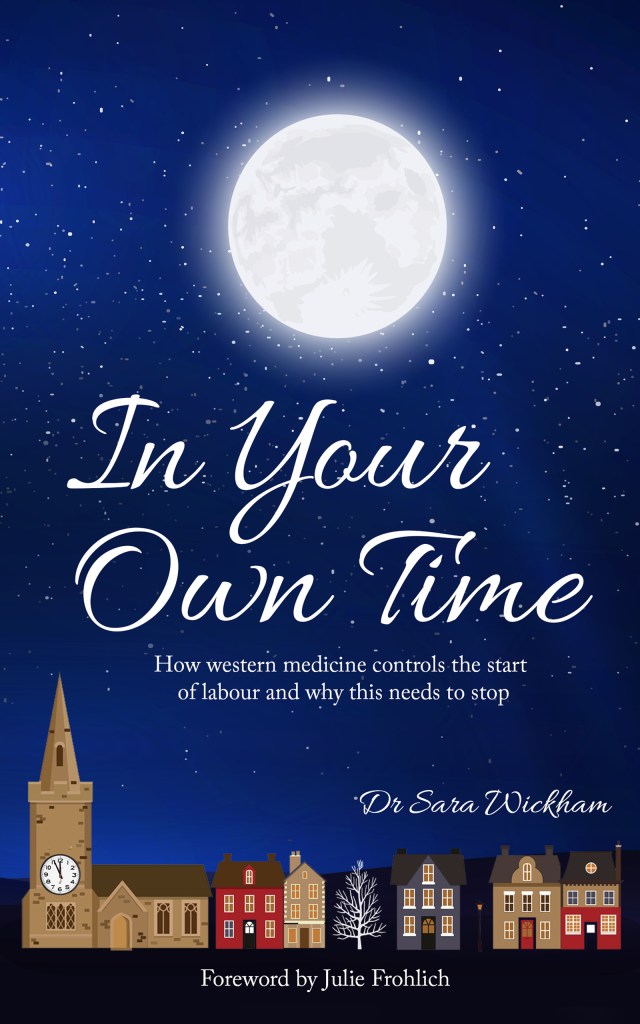
If you would like more help understanding birth-related decision making, and access to loads of helpful tools that can assist you in making the decisions that are right for you, I wrote this book for you:
Paracetamol in Labour
There is one other aspect to consider when it come to the question of using paracetamol in labour.
A few years ago, ‘the Undercover Midwife’* wrote, this blog post on Paracetamol and Labour. She posited the theory that there is a correlation between the increase (as observed by the writer and other midwives) in women having long latent (or prodromal, if you’re in the US) phases of their labour and advice to take paracetamol, often repeatedly, during this time.
It’s a fascinating theory, and one I often discuss. Especially when talking about what helps and what hinders the progress of labour.
“I just do not remember, either as an NHS or independent midwife in the 1980s and 1990s, women having such long exhausting and problematic latent phases as they do now.
I also don’t remember anyone telling women to “take a couple of paracetamol”.
Recently I informally supported someone at home who had had 4 or 5 days of latent labour. I asked her about her paracetamol intake and was shocked to find that she had consumed 25 to 30 grams of paracetamol over that period. The midwives she had been ringing on the local “triage unit”, each one different, had told her to take paracetamol regularly and this she had done.
I asked if it was helping and she said it wasn’t, so I suggested she stop taking it which she did. Quite apart from the impact on the liver, could the ubiquitous advice to take paracetamol be impacting on labour and, more particularly be affecting, or even creating, the latent phase of labour as we have come to know it today?” The Undercover Midwife
The issues above about the disadvantages of pain are still relevant here. But this is a great blog post and a truly interesting theory. If you haven’t yet read and pondered it, I urge you to head over to The Undercover Midwife and read the whole post so you can find out more about it for yourself.
* P.S. No, it’s not me. A good number of people have asked me over the years if I am the Undercover Midwife. No, I am not. It takes me enough time to look after and write the blog posts on my own website, let alone another one as well. I think she’s rather fabulous though.

About the Author: Dr Sara Wickham is an author, speaker, and researcher specialising in pregnancy, birth and maternity care. Her work focuses on evidence-based, woman-centred information and informed decision-making, drawing on more than 30 years of midwifery knowledge and experience. Her most recent book is Midwifery Wisdom.
Want to stay up to date and get regular updates on birth-related research and thinking sent free to your inbox?
Plus news of Sara’s books, projects, events, and courses?
Sign up to our email newsletter list here
We’ll send you regular, friendly updates to help you keep up-to-date and stay informed.

Books to help you become informed and make the decisions that are right for you…



If this blog post or any of Sara’s work has helped you or those you care for, please buy her a coffee and help us continue to provide independent birth information online as well as in her books.
Thank you.
5 comments for “Paracetamol in pregnancy and birth”