
The concept of ‘person-centred care’ is really important. We sometimes talk or write about woman-centred care, or family-centred care, but these all basically mean the same thing.
In this blog post, I’m going to draw on a definition of person-centred care which was published in the British Medical Journal, in order to explain the key elements of this, and why it sometimes doesn’t happen.
People and systems
“People-centered care moves away from traditional care models where care is determined by uniform procedures derived from needs associated with disease classifications and degrees of dependency and by organizational constraints (what has sometimes been termed as models of focused care in services).” (Santos-Peña 2017).
This definition contains a couple of key points.
First, there’s the fact that we aren’t defined by our physical health or needs, and people with the same illness or in the same situation may not want or benefit from the same treatment. There is no one size fits all.
But this aspect of the definition of person centred care also shows how the tension between the needs of individuals and the needs of bureaucratic organisations is at the heart of the problems that we are facing within the maternity services, and within health care more generally.
On the one hand, we all want to be able to have the health care that we want, as individuals.
I want that for me, and I want it for you.
A modern problem
But we live in a modern, capitalist world. Health care services are run as large systems, or organisations, and large systems need rules, procedures, and guidelines to ensure that they function effectively.
Can you imagine what would happen if we all just went to the hospital when it was a good time for us, and didn’t have appointments? If midwives and doctors just turned up to work when they felt like it, rather than having set shift times? If caregivers wrote up your medical notes on whatever bit of paper they had handy?
So some systems and guidelines can be helpful, within large organisations. It’s very beneficial that we have centres of excellence where the best experts can get together and further our knowledge of rare things. People have lived for decades longer than they would otherwise have done because of this.
But many people would agree that the move towards a systems approach has gone far too far, and that systems are being imposed in the wrong way. This is partly driven by the adoption of business models in health care, and we have a great article that here.
Those who are arguing for person-centred care recognise that it’s vital to get a better balance.
The importance of self-determination

To make effective this model implies having an integral vision of people and recognition of its value and singularity and which looks at the capacities, rather than the deficits, and supports the self-determination of individuals.“ (Santos-Peña 2017).
Self-determination is a really key term here. It is usually defined as, ‘the process by which a person controls their own life.’
And that’s what is central to my work, and to why I write the books I write.
I’m sure those who use my work a lot get tired of hearing me say this, but it’s not about what I think is best.
Or what your midwife, doctor, doula, or hypnobirthing class leader thinks is best.
It’s about what’s right for you.
I can’t know whether you have a high or low pain threshold, whether you love or hate the idea of a water pool, or which of your family members you feel the safest with. (Hint: whoever comes to mind when I say ‘safest’ is probably someone you’re okay with being around you in labour. That doesn’t mean you have to invite them. I’m just saying. If there are family members who make you feel on edge, or who you don’t feel you can be yourself around, I humbly suggest that you might not want to have them around during your birth. But, as always, it’s up to you.)
Because I can’t know these things about you, I don’t have all the information needed to make the decisions that are right for you.
And neither does anyone else.
Person-centred care and professionals
The last part of the definition relates to care professionals.
“Direct care professionals, in addition to protecting people and attending to their diverse needs, relate to the knowledge of their life histories looking for opportunities and supports so that each person can develop their capacities, have control over their daily lives and consequently feel better.
Person Centered Care is a model that has an approach with a high capacity to improve the quality of services and guide good professional practice.” (Santos-Peña 2017).
Many of those working in systems of care would love to be able to do this more.
But they find this to be increasingly difficult.
Yes, there are bad eggs. That’s the same in every professional or occupational group.
But the people working in health care are also people, and many are just as frustrated as you and I that they can’t provide (or, when they are sick, receive) the quality of health care that we all deserve.
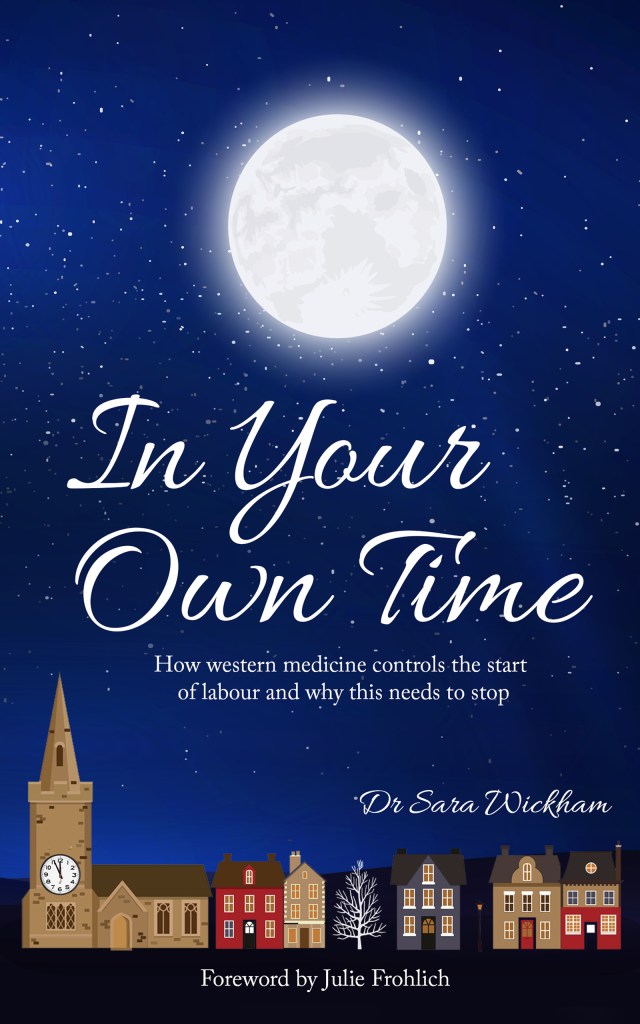
If you’d like to know more about these issues, have a look at What’s Right For Me? It was written to explain things in much more depth, and to help you be able to make the decisions that are right for you.
You’ll find more on this, and many other topics, in my upcoming book on midwifery knowledge.
I’ll be sharing more details in September, and my email subscribers always get the earliest, juiciest, and most extensive details!
If you’re not on my email list and would like to be, sign up here, and then check for the confirmation email.

Santos-Peña MA (2017). Implementing person centred approaches. BMJ; 358 doi: https://doi.org/10.1136/bmj.j4126
photo credit: nina vieira. Esperando Aisha Badu via photopin (license)

About the Author: Dr Sara Wickham is an author, speaker, and researcher specialising in pregnancy, birth and maternity care. Her work focuses on evidence-based, woman-centred information and informed decision-making, drawing on more than 30 years of midwifery knowledge and experience.
Want to stay up to date and get regular updates on birth-related research and thinking sent free to your inbox?
Plus news of Sara’s books, projects, events, and courses?
Sign up to our email newsletter list here
We’ll send you regular, friendly updates to help you keep up-to-date and stay informed.

Books to help you become informed and make the decisions that are right for you…



If this blog post or any of Sara’s work has helped you or those you care for, please buy her a coffee and help us continue to provide independent birth information online as well as in her books.
Thank you.