
I am a big fan of Archie Cochrane, who said many wise things in his time.
If you don’t already know his name, he was a doctor who pioneered medical research, and the Cochrane Collaboration is named after him.
One of his nuggets of wisdom has become known as Cochrane’s aphorism.
Archie Cochrane is known by many for his emphasis on the value of randomised controlled trials (RCTs).
He argued that these provide the most reliable kind of evidence when it comes to assessing whether a drug or intervention is effective.
I wholeheartedly agree, although from time to time I get concerned that some of those who claim to promote evidence-based practice have forgotten the importance of matching the research method to the question, which can mean that the RCT is sometimes inappropriately endowed with a status which it cannot live up to

My position is that evidence comes in many different forms. All of those forms are potentially valuable, as long as we think critically about them, considering context, nuance and the bigger picture.
It is ridiculous to claim that systematic reviews, randomised controlled trials or any other specific research method are intrinsically any better than any other kind of approach.
That’s because different questions or problems require different means and methods of seeking solutions. If you want to know what women think about induction of labour, a randomised controlled trial won’t help you one bit.
But if we want to know if a drug or intervention is effective?
Yes, a well-designed randomised controlled trial is exactly what we need. And, in that context, I would be looking for trial results rather than asking individuals about their experience.
The resource question
But Cochrane’s concern did not begin and end with the effectiveness of treatments. One of his overarching concerns related to the use of resources.
He argued that, because resources are limited, we should use them effectively and equitably, with an emphasis on forms of health care which have been shown to be effective in properly designed studies.
Because of this, Cochrane was also concerned that health professionals should not be unnecessarily ordering tests unless their results were truly needed.
Cochrane’s aphorism
Hence his aphorism:
“Before ordering a test, decide what you will do if it is (1) positive or (2) negative. If both answers are the same, don’t take the test.”
It sounds so simple, doesn’t it?
Yet it’s not something that people commonly think about, or ask themselves.
We have become so used to stepping on scales, holding out our arms for our pulse or blood pressure to be measured or for blood to be taken, and to allowing health professionals to measure, scan and check things, that we don’t tend to think ahead about the implications, or what will be done with the knowledge.
Using Cochrane’s aphorism as a midwife
I first met an idea similar to this when I was a student midwife, through something that one of my mentors used to say. I have no idea whether the midwife concerned had encountered Cochrane or his teachings.
Either way, her application of this was wider than in tests that were ‘ordered’ because sometimes, as we were about to talk to a woman about a screening test such as vaginal examination, she would ask me:
“Why are we doing this, and is it going to give us information that will change our management? Because if not, then why are we doing it?”
This was SO helpful to me, although I do hope, if that lovely midwife reads this, that she will forgive me for noting that I would use different terminology.
I don’t see this as being about ‘my management’, but about what women and families decide. To be fair, I’m fairly confident that the kind of midwife who thought like this thirty years ago would have rephrased it herself since then anyway.
However you phrase it, and whether you ask this question as a provider or potential recipient of health care, I find this a helpful tool.
An important question
Asking whether something is going to give us knowledge that will be helpful within a particular context enables us not only to look at the immediate decision, but to look at that in the context of the wider landscape.
In my view, it is a brilliant way not only of achieving Archie Cochrane’s original aim of effectively using resources, but of throwing new light onto the subject of ‘why’ we are doing something.
It’s so important to step back and ask why we’re doing something, what it will tell us, and what the implications of that knowledge are. This is particularly true when it comes to the myriad screening tests that are offered during pregnancy and childbirth.
Questions like this help people to take a step back and see how this knowledge fits into the bigger picture.
How to use this as a birth supporter
And it’s not just for midwives and doctors. A key phrase that I offer in sessions with women/families and birth workers such as doulas is this:
“What this is going to tell us that we don’t yet know? And will anything change as a result of knowing?”
And then consider whether there are other implications to having the test that you might want to consider or discuss before a decision is made.
A little reflection can illuminate a situation remarkably…
You’ll find more on this, and many other topics, in my new book, Midwifery Wisdom.
In it, I explore the knowledge that experienced midwives develop over years of supporting women through pregnancy, birth, and the postnatal period. How midwives use their senses to assess labour progress, why the maths behind obstetric boundaries needs rethinking, the value of postnatal tea and toast, and when to put your gloves on. I cover topics from risk to cats in a book written to help people understand midwifery, and midwives better understand the value of their own skills and wisdom.

For more on understanding the different kinds of tests that are offered during pregnancy and childbirth, and the sorts of questions you might ask, see my book, What’s Right For Me?

About the Author: Dr Sara Wickham is an author, speaker, and researcher specialising in pregnancy, birth and maternity care. Her work focuses on evidence-based, woman-centred information and informed decision-making, drawing on more than 30 years of midwifery knowledge and experience. Her most recent book is Midwifery Wisdom.
Want to stay up to date and get regular updates on birth-related research and thinking sent free to your inbox?
Plus news of Sara’s books, projects, events, and courses?
Sign up to our email newsletter list here
We’ll send you regular, friendly updates to help you keep up-to-date and stay informed.

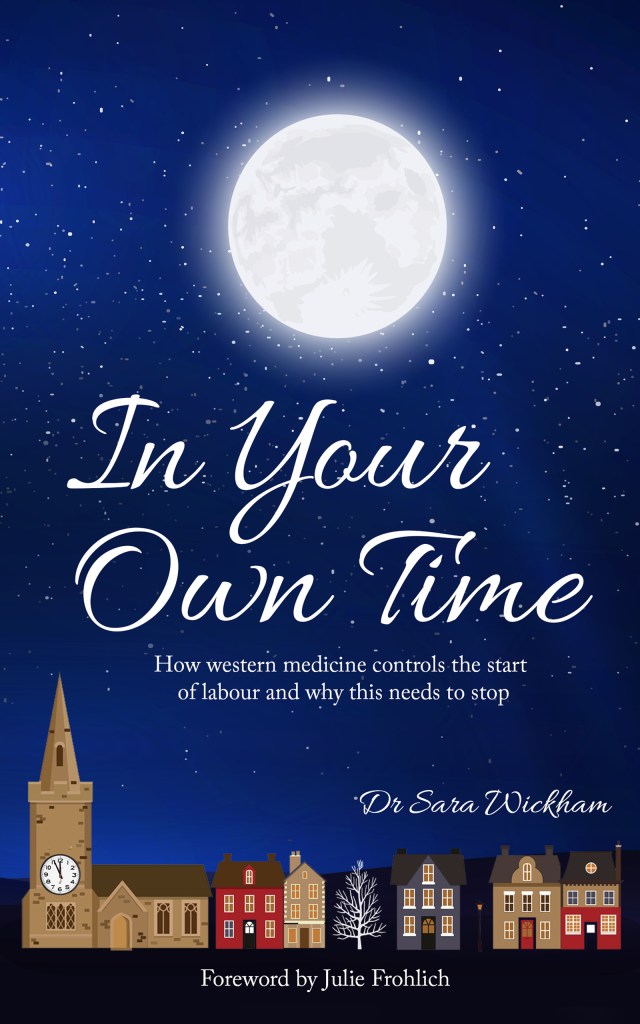
Books to help you become informed and make the decisions that are right for you…



If this blog post or any of Sara’s work has helped you or those you care for, please buy her a coffee and help us continue to provide independent birth information online as well as in her books.
Thank you.